Mapping GEO: Why Discovery Is Still Human
An Interview with Ross Simmonds
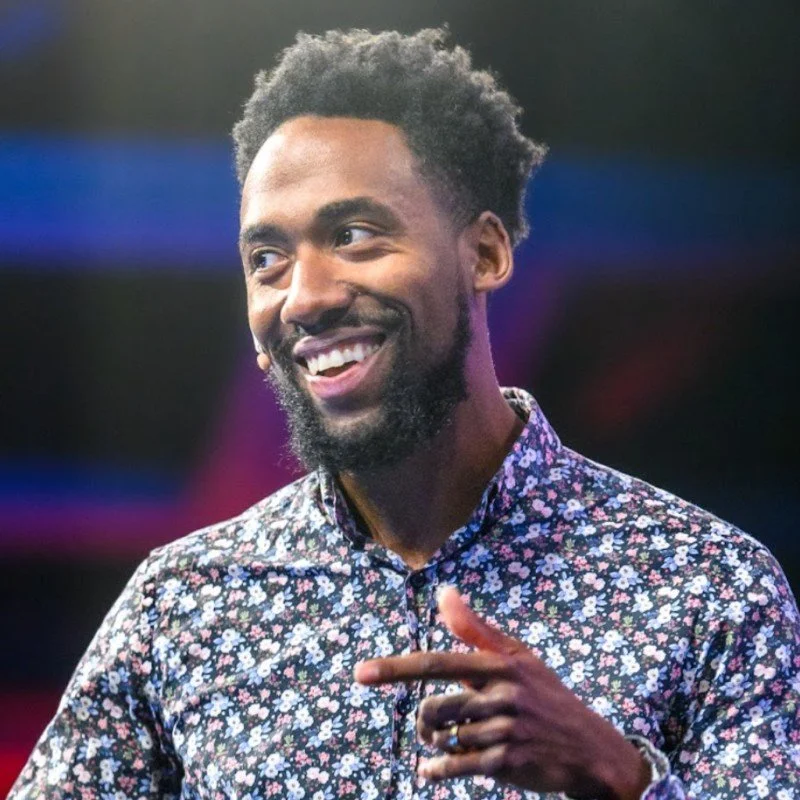
Ross Simmonds

The more I learn, the more I realize how much I didn’t understand.
Not in a dramatic, “everything I knew was wrong” way. More in a steady stream of small realizations that quietly say, Um, actually… followed by another lightbulb turning on.
Lightbulb: The online world isn’t nearly as different from the analog one as I once thought. We still learn the same way we always have. We ask people. We compare notes. We look for reassurance from sources we trust.
There was a time when digital discovery felt more linear. You asked your question of “The Oracle.” (Am I the only one who thinks of Google that way?) You picked one of the top results. Then you moved on with your life, slightly smarter, or at least more informed than before.
After talking with Ross Simmonds, I’m not even sure discovery was ever as linear as we pretended it was. Maybe it’s not that the path broke. Maybe we were measuring it wrong all along.
What is true is that discovery is fragmented now [4, 23]. And maybe it always has been.
You start with a question. But where you ask that question has changed.
You still start with your question. But today, you get an answer in an AI summary. Maybe a Reddit thread makes you second-guess it. A YouTube video convinces you to care way more than you planned. Someone on LinkedIn shares a take that sends you right back to The Oracle.
Rinse and repeat until you either make a decision or forget what you were trying to figure out in the first place. (Please tell me that’s not just me.)
“The biggest shift that has happened in the way that people find things today versus five years ago is the fact that discovery doesn't exclusively live within Google. People are going to YouTube to find out how to do things. They're going to TikTok to find out where to eat. They're going to Instagram to find out what to wear. They're going to Twitter to find out what software to buy. They're going to Reddit to figure out what tools to purchase. All of the ways in which we discover things are now fragmented.”
That shift is what this Mapping GEO series is really about.
In earlier conversations, I’ve explored how AI is reshaping search interfaces, shaking the foundations of websites, and making measurement feel… optimistic at best. But underneath all of that change, one question kept nagging at me.
If algorithms are mediating discovery, why does so much of it still feel deeply human?
It’s Always Sunny in Philadelphia
Talking with Ross helped me see why that question matters. Not because AI doesn’t matter, but because it has revealed something many of us, myself very much included, had forgotten. Discovery was never only about systems, tactics, rankings, or channels.
It has always been about people listening to people.
This conversation is about why that part hasn’t changed, only become more important.
1. Discovery Has Changed, But Not the Way We Think
For a long time, discovery felt simple. If you wanted to know something, you asked The Oracle. If the answer wasn’t quite right, you refined the question and asked again. It wasn’t perfect, but it felt predictable.
That mental model still shapes how many of us think about discovery today. When we talk about “search changing,” we often mean a new interface, a new feature, or a smarter algorithm. (At least, I did.) I assumed the system evolved, but the behavior stayed basically the same.
That’s not what changed.
What actually changed is the number of places people go to figure things out, and how often they check more than one source before believing anything [4, 5, 8, 15].
Search still matters, but it’s no longer the only place discovery happens. People move between platforms depending on what they’re trying to solve.
“Search is important, but the way people search is very different now.”
Instead of one dominant path, discovery now looks more like comparison. People ask a question, get an answer, and then look for confirmation. They want a second opinion. Sometimes a third. Sometimes five. Not because they’re confused, but because they don’t fully trust the information they’re being given [4].

The mistake many brands make is assuming the old model still applies—if they can just rank higher, publish more, or optimize harder, attention will follow. More content. More posts. More output.
But volume doesn’t solve a trust problem. And it doesn’t help when people are actively cross-checking what they’re told.
What does work is understanding where people go to validate information, why they trust certain sources, and when they’re open to influence. Discovery today isn’t about directing attention. It’s about earning trust [18, 31].
And once you start looking at discovery that way, the next question becomes obvious.
Where are people actually being honest?
2. Reddit Is Not a Hack, It Is a Focus Group
Listening Is How You Learn
Reddit makes a lot of us uncomfortable.
Every r/insert-topic-here comes with a warning label and a reputation. (Or at least, it probably should.)
And that’s exactly why it matters.
Brands are often afraid of Reddit because it’s real. Unfiltered. And deeply unconcerned with your messaging plan. There’s a narrative there you can’t control, and that lack of control is unsettling if you’re used to polished platforms and carefully crafted stories.
This is where people ask which product is worth the money? And which one should be burned on the altar of frustration? Which tool actually works? Which one totally sucks. Which option are they going to regret three months from now?
Ross described Reddit as a place people intentionally go when they’re close to making a decision. When the stakes feel real, and they want to hear from others who have already made the choice, Reddit becomes the place they trust.
What makes that powerful isn’t novelty. Reddit isn’t new. What is new is how easily large language models can access and surface those conversations as part of the answers they generate [35].
Ross pointed out that Reddit forces a return to the fundamentals of marketing. Getting closer to customers. Hearing directly from them. Understanding what they’re actually talking about day to day, not what a dashboard or research tool says they should care about.
“Reddit is kind of like the free, open-source ability for marketers to get that focus group in real time on the internet.”
That’s why Reddit works. And that’s why it’s uncomfortable.
You can’t show up, declare how great you are, and expect people to believe you. Shouting your views to try to convince others has never worked. Empathy does.
The brands that arrive trying to be impressive are ignored, if not openly mocked. The brands that show up to learn, to understand frustrations, and to see the world from the customer’s perspective build something far more durable than attention.
They build trust.
3. “More Content” Was Never the (Right) Goal
Somewhere along the way, content marketing became an endurance sport.
Publish more. Post more. Ship more. Fill the calendar. Hit the deadline. Repeat.
“For the last 10 years, gurus and marketers have gone on stages at conferences and preached at the top of their lungs that content is king. Create more content, write more content, and the world will be yours.”
The promise was simple. Create enough content, use the right keywords, and the audience would eventually show up. For a while, that even worked. Platforms rewarded volume. Algorithms amplified frequency. Publishing itself became the goal.
Looking back, this feels like a classic measurement trap. The goal was never more content. The goal was better content. Content that actually helped people, answered real questions, and addressed real needs. But somehow, output became the stand-in for effectiveness [38].
When publishing became the metric, publishing became the job.
That’s when the marketing part quietly disappeared.
“They forget that marketing and content are two different things. Together, they are a beautiful thing, but for a lot of us, we just focused on the content side.”
Many teams ended up producing content in isolation and hoping it would somehow find the right people. Distribution became an afterthought [35, 38]. Relevance was assumed. Timing was dictated by a calendar, not by whether the content actually fit the moment or the audience.
“Instead of actually thinking about how to distribute those stories, or how to tap into the psychology of the people we want to connect with, everyone just started to create, create, create.”
There’s something deceptively satisfying about shipping. It feels productive. The calendar fills up. The boxes get checked. But publishing is not the same thing as connecting.
“Most marketers got stuck in the content calendar mindset. If the calendar says publish today, then that’s what we do. And then they don’t do anything with it.”
The problem was never that people hate content. People hate interruption. Content that shows up at the wrong time, in the wrong place, or with no connection to what someone actually cares about feels like noise, no matter how thoughtful it is [38].
Marketing is the part that makes content matter. It’s the work of understanding who you’re talking to, what they need right now, and how to reach them in a way that feels helpful instead of forced.
“People stopped understanding the fundamentals of marketing around distribution, amplification, research, and storytelling. The things that make marketing not just a science, but also an art.”
4. Visibility Still Comes From Trust, Not Tricks
E-E-A-T Without the Jargon
Ready for some acronyms? (Because nothing says “authentic human connection” like a four-letter initialism that sounds like something you order off a menu…)
E-E-A-T stands for Experience, Expertise, Authority, and Trustworthiness. And yes, it’s a concept Google uses [39]. But in my conversation with Ross, it became clear this isn’t an “SEO thing” so much as a human thing. It’s the same set of signals we’ve always used to decide whether someone is worth listening to.
Ross put it plainly:
“To achieve visibility, you need to demonstrate that you as a creator, as a brand, as a business, are an expert, you have authority, you should be trusted… Experience, expertise, authority, and trust.”
And then he made a point that should probably live on a sticky note above every marketer’s desk:
“Every storyteller should be understanding experience, expertise, authority, and trustworthiness elements of good communication.”
Because isn’t this how credibility works? In real life, credibility doesn’t need to be announced. In fact, the more someone insists they’re a genius, the less likely I am to trust that they are. That level of certainty tends to live at the top of Mount Stupid, where confidence outpaces competence early in the learning curve. We learn just enough to feel like we’ve mastered the topic, and we confuse progress made with all the progress there is to be had.
Meanwhile, the people who actually know what they’re talking about tend to speak differently. They say, “It depends.” They ask clarifying questions. They acknowledge trade-offs. They don’t need to sound certain to sound credible.
That’s also why trust travels.
Ross emphasized that these credibility signals don’t just matter for Google. They influence visibility across platforms because platforms are ultimately trying to surface what humans already respond to [31].
“The authority, experience, expertise, and trustworthiness of your domain… influence your visibility on these platforms.”
And the outcome of doing it well isn’t just a better ranking.
“The outcome of having those things is an increased level of visibility in pretty much every platform.”
Now here’s where the trap shows up.
A lot of brands treat visibility like the goal and trust like the tactic, as if trust is just the thing you do on the way to getting attention.
But the real goal isn’t visibility. Visibility is just the easiest thing to measure [4, 40].
What we’re actually trying to earn is engagement. People who come back. People who stay longer than three seconds. People who trust you enough to click, subscribe, share, buy, donate, or recommend you to someone else. And the best kind of engagement is the kind that happens repeatedly, because it means the relationship is real.

The problem is that if you optimize only for visibility, you can get it. There are plenty of tactics that will spike impressions. But that’s where you end up with Cobra Effect outcomes [41]. You hit the metric and still miss the point. You get eyeballs without attention. Clicks without conversions. Traffic without loyalty.
Trust takes longer. But it compounds.
Ross’s point wasn’t “get visible.” It was: become trustworthy enough that people choose to engage with you again and again, and the visibility takes care of itself.
5. AI Changed the Funnel, Not the Need for Strategy
What Collapses, What Expands
One of the easiest mistakes to make right now is assuming AI “breaks” the funnel.
Part of the confusion comes from a deeper shift that’s easy to miss. Jono Alderson described how we’ve moved from largely deterministic systems to probabilistic ones. For years, digital systems behaved predictably. You did X, you got Y. Ask the same question, get the same answer.
AI doesn’t work that way.
The output isn’t fixed. It’s inferred. Context matters. History matters. And the same question can lead to different answers, depending on who asks it and what the system already knows [11].
That shift collapses parts of the top of the funnel.
Some questions that used to send people clicking through five pages now get answered in seconds [5]. A lot of “early research” gets handled inside the AI response itself. And for certain types of queries, that’s genuinely helpful.
But it doesn’t mean people stop thinking, comparing, or deciding.
Instead of spending time gathering basic information, people spend more time validating it. Instead of clicking ten links, they go looking for reassurance by asking those they trust (maybe on a Reddit forum or an AI chatbot). The “search” doesn’t disappear; it shifts from finding answers to building confidence in decision-making [6, 7, 38].

And this is where the old mental model breaks.
For a long time, brands could assume shoppers trusted Google as the Oracle. If you ranked high, it felt like Google had stamped your answer as “probably correct,” or at least “good enough to click.” Ranking was a proxy for credibility.
Now, confidence is built differently.
Ross described one of the clearest examples of this shift: when people get close to a decision, they stop relying on a single system and start looking to other humans.
“Humans are going to Reddit, they’re going to forums to get answers from other people around bottom-of-funnel transactional, commercial, intent-related questions.” [33]
People cross-check across multiple sources. Sometimes the customer is doing that cross-checking. Sometimes the AI is doing it on their behalf. Either way, the behavior hasn’t disappeared. It has shifted. The initial answer is faster, but the trust-building phase lasts longer.
Which means strategy still matters. In fact, it matters more.
But strategy now has to account for how discovery and decision-making unfold across more conversations, more contexts, and more sources than we’ve ever had to think about before [23].
6. You Can’t Measure What You Can’t See
Attribution Was Built for a World That Doesn’t Exist
Once you accept that funnel behavior has shifted, the next problem shows up almost immediately.
Measurement starts wobbling [8, 30].
Attribution models were built for deterministic paths [14]. You could observe the journey. Track the clicks. Assign credit. Build dashboards that make everything feel explainable.
But AI introduces something marketers were never good at tracking in the first place.
Context. History. Memory [11, 14, 42].
Ross explained why this breaks the measurement model at its foundation.
“Within these LLMs is memory… There is a unique context that every experience that you have within an LLM is going to have that is different from everyone else.”
And it’s not just that responses differ. It’s that you can’t see what caused them to differ.
Two people (or even the same person at different times) can ask the same question and receive very different answers because the system draws on different memories, preferences, and contexts.
“You could go to your LLM today and ask for a recommendation… and you’re going to get a completely different response than I would.”
And if you can’t see the context behind the answer, then you can’t reliably map the journey either [6, 7].
“Everyone wants to track things and have perfect attribution and perfect metrics. It’s impossible… You can’t track memory. You can’t even know what is being stored in my memory.”

This is why trying to force perfect attribution in an AI-mediated world becomes risky [43]. Not just because it’s hard, but because it creates false confidence. It tempts us to keep acting like the system works the way it used to, even though it doesn’t.
And honestly? That’s both terrifying and kind of freeing.
Because the uncomfortable truth is that human context always mattered more than we admitted. Deterministic systems just let us pretend otherwise. Probabilistic systems remove the illusion.
So the goal isn’t perfect measurement.
The goal is better decision-making [21, 35].
7. Distribution Matters More Than Ever
Publishing Isn’t the Hard Part
If there was ever a time when “just publish more” worked, that time is over.
AI has made average content cheap and abundant. Summaries, explainers, listicles, surface-level advice… all of it can be generated instantly. That doesn’t mean content is dead. It means content is everywhere.
And when content becomes abundant, being “pretty good” stops being a differentiator [24].
“It’s never been easier for all of us to create mediocre content. We can all create average content now.”

“Everyone can write a C-level. It’s… mediocrity. It has never been easier to achieve.”
So what still stands out?
Excellence.
Excellence is still hard because the part that remains “untouchable” isn’t output. It is taste. It’s judgment. It’s knowing what your audience actually cares about and how to make something worth paying attention to in a world more full of content trying to grab attention than ever before.
“There’s one part of creation that… is still untouchable, and that is taste… the ability to actually create excellent content.”
When I asked what makes content excellent, he gave a framework I immediately wrote down.
“There are four E’s… Educational, engaging, entertaining, and empowering content.”
Great content teaches. It holds attention. It earns interaction. And it leaves people feeling like something shifted. Like they learned something. Like they can do something.
“You want people to feel so good after reading it… they could run through a wall.”

But here’s the hard truth.
Most brands won’t do that work.
Not because they don’t want to. But excellence takes research, effort, collaboration, and time. It takes the “extra level of sweat” that most teams can’t (or won’t) invest consistently. [36]
“Most creators, most brands, will never create an excellent asset… It sucks to hear, but they’re not willing to put in the work.”
And when excellence is rare, distribution becomes the difference between content that gets noticed and content that disappears [12].
“So distribution becomes key. You have to get more spread… You have to hire influencers… You have to pay for inclusions in the press…”
That’s the shift.
Content doesn’t move on its own anymore [38]. Not when AI can generate thousands of similar posts before lunch.

If you want people to find what you create, you have to think about how it travels.
So the question isn’t just “What should we publish next?” It’s “How will anyone actually discover it?”
Because the hard part isn’t creating content anymore; It’s getting people to read it [24].
8. Designing for Humans Still Wins
Human-First Thinking Solves Bot Problems Too
At some point in every conversation about AI, search, and optimization, things start to sound like a battle: humans vs. bots. Design for machines or design for people. Optimize for algorithms or optimize for users.
And sure, it feels like the bots are in charge right now. They write the summaries. They surface the recommendations. They decide what gets seen.
But they don’t get to make the decision.
“The robots give you visibility. They might give you a bit of a presence, but the human controls the ultimate decision to buy.”
The human controls the decision to buy. That line snapped the whole conversation into focus for me. AI might influence discovery, but humans still decide what they trust. Humans decide what feels credible. Humans decide if something is worth their time, attention, or money. (And if you’ve ever watched someone bail on a website because the pop-up blocked the “X,” you know how fragile that decision can be.)
So instead of obsessing over what the machine wants, the better question is: what does the human want?
“I still think you need to lean more heavily towards the humans over the bots today.”
Human-first thinking is one of those ideas that gets tossed around so much it can start to sound like a motivational poster. But it’s actually practical. It’s clarity. Structure. Usability. Content that answers real questions without making people work for it. Language that sounds like a person wrote it, not a compliance team. Experiences that don’t punish someone for trying to learn.
When people feel understood, they stay. When they stay, they engage. When they engage, they remember you. And that kind of engagement is the thing you can’t fake with tricks or tactics.
It’s also a relief, honestly. It means we don’t have to chase every platform change like it’s a new religion. We don’t have to contort our content to satisfy every shifting system. We need to do the slower work: build trust, be genuinely useful, make it easy for people to get what they came for.
“Win the heart, and then you win the wallet.”

And that’s the whole point. AI might decide whether humans show up.
But humans decide whether you matter.
9. What I’m Taking With Me
What’s Old is New Again
After talking with Ross, what struck me most was how little of this is actually new and how much more it matters now.
Discovery has always been social. People have always learned by asking other people, comparing notes, and looking for signals of trust. AI didn’t remove that behavior. If anything, it made it more obvious that this is what we’ve been doing all along.
What’s changed is the scale. The noise. The speed. The number of places people can go for answers and the number of ways those answers get filtered before they ever reach us. And the fact that we can’t pretend that a single channel is the path anymore.
But the fundamentals haven’t changed.
Listening still beats guessing. Trust still does the heavy lifting. And distribution isn’t optional just because you wrote something good.

The part that feels different now is that the consequences show up faster when you ignore those fundamentals. If you’re not building trust, people can tell. If you’re not listening, you’re guessing. And if you’re only optimizing for visibility, you might get impressions… and lose the actual relationship.
“This is the most important time in marketing history since the dawn of the internet.”

Of course, this is the era I decided to start learning about search like a serious person.
But I get what he means. We’re early. The rules are still forming. We’re still experimenting.
“We’re still up to bat. We haven’t even hit first base yet.”
No one has it fully figured out yet. It also means the people who act like they have are probably not the ones we should be learning from. The more I learn, the more I realize the experts right now aren’t the ones chasing certainty. They’re the ones paying attention, testing ideas, staying curious, and adjusting without ego.
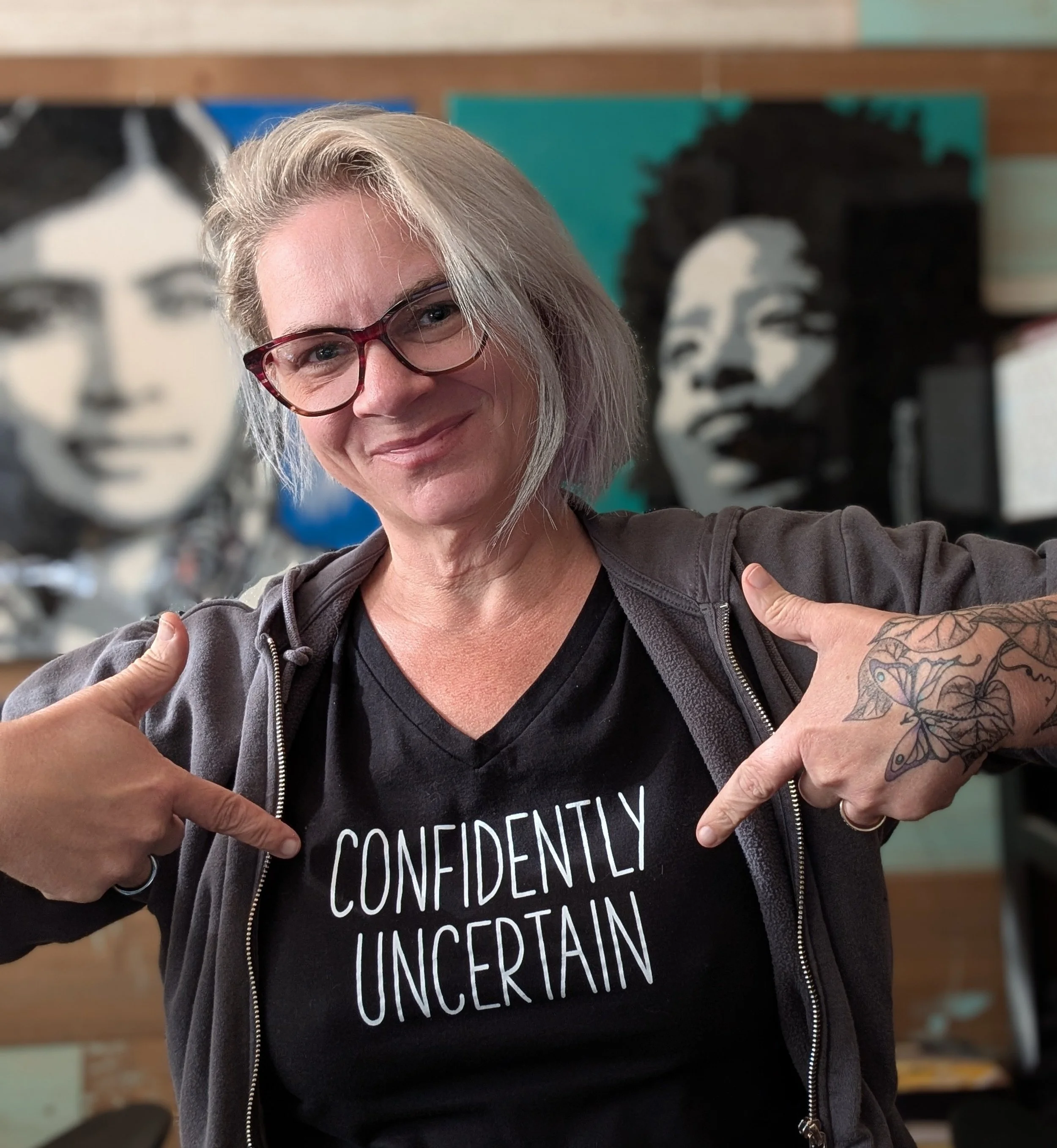
Me - Confidently Uncertain (as always)
For me, that’s the takeaway. Not a new framework or a new channel, but a reminder to stay curious, listen longer than feels comfortable (and, yes, write longer than feels comfortable), and keep trying to understand what people actually trust… even when it’s messy.
10. One Thing I’d Tell Another Non-Expert
Don’t Try to Outsmart This
If there’s one thing I’d tell another non-expert trying to make sense of all of this, it’s this: you don’t need to master AI to adapt to what’s happening.
You don’t need to understand every model, every update, or every new interface. You don’t need to panic every time another LLM changes something.
What you do need is a solid understanding of people.
How they learn. How they decide. How they signal trust. How they react when something feels helpful versus when it feels forced. Because that part doesn’t age out.
One of my favorite threads in the conversation with Ross was how grounded he was about experimentation. Not in a hype-y “move fast and break things” way. More in a “try it and learn something” way.
“Experiment. Try things. Even the tools people are ripping apart online.”
Because that’s how you build judgment. That’s how you learn what works for your audience in your context.
“That’s how you find an edge.”
Not by outsmarting the system, but by staying engaged long enough to actually learn.
The fundamentals age better than tools. Algorithms change. Interfaces evolve. But people are remarkably consistent in how they respond to clarity, relevance, and respect.
So if you’re new to this, like me, here’s the good news: you don’t have to get everything right. You just have to keep learning.
Rapid Fire: Five Quick Questions with Ross Simmonds
Before we wrapped up, I asked Ross to switch gears. Less theory, fewer caveats, and no overthinking. Just quick questions and instinctive answers. Here’s the Rapid Fire.
Q: What is the biggest change in how people find things today versus five years ago?
Ross: “Discovery doesn't exclusively live within Google. People are going to YouTube to find out how to do things. They're going to TikTok to find out where to eat. They're going to Instagram to find out what to wear. They're going to Twitter to find out what software to buy. They're going to Reddit to figure out what tools to purchase. All of the ways in which we discover things are now fragmented.”
me: I don’t know about y’all, but I do NOT go to TikTok to do anything. And Instagram - no! Sigh. But I get his point. I definitely learn from YouTube. And Reddit forums do help a lot of people make decisions.
Q: If you were advising a brand tomorrow, what’s the single most important thing they should do differently to stay visible in the age of AI?
Ross: “Ensure that they have landing pages on their website that target high-intent commercial queries.”
Got it! Landing pages should target ready-to-purchase audiences. Check.
Q: What’s one thing SEOs, CROs, or experimenters should stop doing right now because it no longer works?
Ross: “I think there's no point right now worrying so much about what color the buttons are on sites. There's no point right now worrying so much about what is the perfect prompt. There's no point right now focusing so much energy on the little things when we have bigger fish to fry.”
Me: Fish are friends, not food! No? Fine. No - I get it. The bigger fish is recognizing that we need to understand WHO our audience is and what their needs are, and where they are, and how to get our content and products where they are first? Right? Please tell me I get this.
Q: What’s the most misunderstood thing about AI and search?
Ross: “Everyone wants to track things and have perfect attribution and perfect metrics. It’s impossible… You can’t track memory. You can’t even know what is being stored in my memory.”
Me: Especially MY memory. I’m like Hammy the squirrel after a Monster energy drink. Yay Neuro-spicy + peri-menopause.
Q: Given how AI is changing discovery, what’s one resource every digital professional should revisit right now?
Ross: “I would suggest folks actually go back and read Ogilvy on Advertising… I think we gotta go back to fundamentals.”
Talk about old school! Here we are talking about Reddit and AI Search and Ross is sending us back in time to 1983. Foundations baby.
Explorer’s Log

Credit: Giphy, Jurassic Park
Here’s our running reading list so far. It’s a cumulative trail of everything we’ve discovered (and occasionally tripped over) along the way. It includes articles referenced in our first Mapping GEO piece, this one, and a few that we’ll likely cover in future installments. I’m keeping the numbering consistent for those joining the journey mid-map, because honestly, I’m learning right alongside you.
How Search Works – Google Search Central Blog: Google’s official guide to crawling, indexing, and ranking. Helpful for understanding what they say drives discovery (and what probably doesn’t). https://developers.google.com/search/docs/fundamentals/how-search-works.
SEO for AI Search Engines: An Early POV – Alisa Scharf (Seer Interactive): Alisa breaks down what optimization means when the “search engine” is an AI model instead of a crawler. Context and entity understanding now outrank keywords. https://www.seerinteractive.com/insights/seo-for-ai-search-engines-an-early-pov.
Study: The AI Search Landscape Beyond the SEO vs GEO Hype – Alisa Scharf & Marketa Williams (Seer Interactive): A comprehensive industry study on how AI-driven discovery systems interpret and deliver information and where traditional SEO falls short. https://www.seerinteractive.com/insights/study-the-ai-search-landscape-beyond-the-seo-vs-geo-hype.
2024 Zero-Click Study – Rand Fishkin (SparkToro): Quantifies how often users find what they need directly in search results, explaining why “visibility” no longer means “traffic.” https://sparktoro.com/blog/2024-zero-click-search-study-for-every-1000-us-google-searches-only-374-clicks-go-to-the-open-web-in-the-eu-its-360/.
The First-Ever UX Study of Google’s AI Overviews – Kevin Indig (Growth Memo): Early research showing how AI Overviews reshape user behavior, trust, and attention, and why “top ranking” might not matter anymore. https://www.growth-memo.com/p/the-first-ever-ux-study-of-googles.
The Impact of AI Overviews on SEO – Kevin Indig: Quantifies the ripple effect of AI Overviews on traffic and click-through rates. A practical must-read for visibility watchers. https://www.growth-memo.com/p/the-impact-of-ai-overviews-on-seo.
How AI Overviews Are Impacting CTR: 5 Initial Takeaways – Nick Haigler (Seer Interactive): How Google’s AI Overviews shift clicks and impressions, revealing why CTR benchmarks are no longer reliable indicators. https//www.seerinteractive.com/insights/how-ai-overviews-are-impacting-ctr-5-initial-takeaways.
Why 2020’s SEO KPIs Won’t Work in 2024 in a GenAI & Data-Scarce World – Wil Reynolds (Seer Interactive): Argues that success in the GenAI era can’t be measured in clicks. He makes a convincing case for measuring authority and usefulness instead. https://www.seerinteractive.com/insights/why-2020s-seo-kpis-wont-work-in-2024-in-a-genai-data-scarce-world.
The Next Big Thing: AI Browsers – Alisa Scharf, John Lovett & Jordan Strauss (Seer Interactive): Explores how AI browsers summarize and filter web content, potentially replacing traditional search altogether. https://www.seerinteractive.com/insights/the-next-big-thing-ai-browsers-what-marketing-leaders-need-to-know-now.
Claude’s Economic Index Reports – Anthropic: Regular updates analyzing how AI tools are used globally by whom, for what, and how often. A macro view of GEO’s evolving audience. https://www.anthropic.com/research/anthropic-economic-index-september-2025-report.
AI Memory Features Will Transform Search and Marketing – Christian J. Ward: Why AI “memory” makes discovery personal, creating continuity between queries and transforming how people find (and re-find) information. https://www.bedatable.com/p/ai-memory-features-will-transform-search-and-marketing.
The Growth Plateau: Why Investing in Brand Awareness Is Your Next Strategic Move – Brittani Hunsaker (Seer Interactive): Argues that when performance plateaus, strong brand signals become the differentiator and the foundation of long-term growth. https://www.seerinteractive.com/insights/the-growth-plateau-why-investing-in-brand-awareness-is-your-next-strategic-move.
Personas Are Critical for AI Search – Kevin Indig & Amanda Johnson (Growth Memo): Explains why personas are still essential in the age of AI search. They help feed systems the right context. https://www.growth-memo.com/p/personas-are-critical-for-ai-search.
The URL-Shaped Web – Jono Alderson: Explores how the web is evolving from pages and links to entities and meaning and how that changes “ownership.” https://www.jonoalderson.com/conjecture/url-shaped-web.
The Sea of Sameness Problem in Content Marketing & SEO – Wil Reynolds: Reminds us that ranking isn’t the goal; helping people is. Real value lies in content that’s original, trustworthy, and shareable. https://www.seerinteractive.com/insights/the-sea-of-sameness-problem-in-content-marketing-seo.
On Propaganda, Perception & Reputation Hacking – Jono Alderson: A provocative look at how algorithms manipulate what audiences see and believe and why reputation is now a survival skill. https://www.jonoalderson.com/conjecture/propaganda-perception-reputation-hacking.
Marketing Against the Machine Immune System – Jono Alderson: Explains how algorithms evolve to defend their own definitions of “truth,” filtering the digital environment like living immune systems. https://www.jonoalderson.com/conjecture/machine-immune-systems.
Brand Authenticity and Consumer Trust in the Digital Age – Aditi Mehta: Explores how genuine behavior (not performative authenticity) builds long-term consumer trust. https://management.eurekajournals.com/index.php/IJTOMM/article/view/992.
Digital Ethnography: Principles and Practice – Sarah Pink, Heather Horst, John Postill, Larissa Hjorth, Tania Lewis & Jo Tacchi: A foundational work in studying online culture and behavior through anthropology. Key to understanding brand perception in digital spaces. https://www.christian-cohen.de/wp-content/uploads/2019/09/Pink-et-al-Digital-Ethnography_-Principles-and-Practice-Sage-2016-compressed.pdf.
The Optimizer’s Playbook: Expert Strategies for Digital and Real-Life Success – No Hacks Podcast, Sani Manić: Candid interviews with optimization pros on where strategy meets psychology (and humility). https://www.nohackspod.com/episodes.
When Humans and AI Work Best Together — and When Each Is Better Alone – MIT Sloan Management Review: Explores how humans and AI complement each other in decision-making. Useful for understanding collaboration in GEO systems. https://mitsloan.mit.edu/ideas-made-to-matter/when-humans-and-ai-work-best-together-and-when-each-better-alone.
As AI Meets the Reputation Economy, We’re All Being Silently Judged – Harvard Business Review: Explains how AI-driven reputation systems continuously evaluate people and brands (often invisibly), shaping access, trust, and opportunity. https://hbr.org/2018/01/as-ai-meets-the-reputation-economy-were-all-being-silently-judged.
“Aligning Insights, Intent, and Impact” – TLC Talk: Juliana Jackson dismantles the linear “customer journey” and reframes discovery as fragmented; argues for content-market fit over funnels. https://youtu.be/iCuVLTSdGD8.
The Zero-Effort Lie: How AI is Accelerating the Death of the Internet: Exposes how AI’s promise of effortless creation is eroding creativity, meaning, and quality (and why human effort still matters.) https://nohacks.substack.com/p/the-zero-effort-lie-how-ai-is-accelerating.
LLM Conversion Rates – Nick Haigler (Wix Studio AI Search Lab): Why large language models often drive higher conversion rates and how marketers can tap into them. https://www.wix.com/studio/ai-search-lab/llm-conversion-rates.
Study: How Do Stadium Sponsorships Impact Localized AI Visibility? – Nick Haigler & Katie Perkins (Seer Interactive): Banks with stadium sponsorships appear 3× more often in local AI search and 3.7× more in their home markets. https://www.seerinteractive.com/insights/study-stadium-sponsorships-impact-ai-visibility.
AIO Impact on Google CTR: September 2025 Update – Tracy McDonald (Seer Interactive): The latest data on how AI Overviews continue to reshape click-through rates across Google results. https://www.seerinteractive.com/insights/aio-impact-on-google-ctr-september-2025-update.
How LLMs Amplify Brand Misconceptions & How to Address Them With GEO. Nick Haigler. If AI tools surface misconceptions about your brand, publish authoritative, updated content to overwrite them over time. https://www.seerinteractive.com/insights/using-geo-to-address-brand-misconceptions.
Case Study: 6 Learnings, 1 site - How Traffic from ChatGPT Converts. By Nick Haigler & Garman Chan. Shows that AI-driven visitors convert at much higher rates due to stronger intent. https://www.seerinteractive.com/insights/case-study-6-learnings-about-how-traffic-from-chatgpt-converts.
The Hotelier’s survival guide: “survivorship bias” and how to analyse the Unconstrained Demand for your hotel (Part 2). By Marta Romero. A clear explanation of how visible performance can mask hidden demand, and why measuring only the visitors you see leads to dangerous misreads in the AI-filtered era. https://www.mirai.com/blog/the-hoteliers-survival-guide-survivorship-bias-and-how-to-analyse-the-unconstrained-demand-for-your-hotel-part-2/.
Social Media Metrics That Matter in 2025 – Ross Simmonds. A breakdown of why impressions and reach are easy to inflate, while trust, attention, and sustained engagement are the signals that actually matter in modern discovery. https://rosssimmonds.com/blog/social-media-metrics/.
Reddit Brand Defense – Foundation Inc. Lab. Explores how brands should monitor and protect their reputation on Reddit, including when to engage, when to listen, and why restraint often builds more trust than response. https://foundationinc.co/lab/reddit-brand-defense
Reddit SEO: How to Use Reddit to Rank in Google – Ross Simmonds. Explains Reddit’s growing influence on search results and buying decisions, and how ethical participation earns long-term visibility. https://rosssimmonds.com/blog/reddit-seo/.
Subreddit Engagement: A Guide for Brands – Ross Simmonds. A practical framework for participating in subreddit communities by listening first, contributing meaningfully, and avoiding extractive marketing behavior. https://rosssimmonds.com/blog/subreddit-engagement/.
Answer Engine Optimization (AEO): How to Win in AI Search – Ross Simmonds. Outlines how AI answer engines change discovery and why brands must become trusted sources worth summarizing rather than pages optimized to rank. https://rosssimmonds.com/blog/answer-engine-optimization/.
Research-Driven Content: How to Create Content People Actually Trust – Ross Simmonds. Argues that original research and insight-driven content are now essential for earning trust, differentiation, and sustained attention. https://rosssimmonds.com/blog/research-driven-content/.
The 4 E’s Framework for Repurposing Content – Foundation Inc. Lab (Vol. 230). Introduces Ross’s “4 E’s” framework (Educational, Engaging, Entertaining, Empowering) as a way to evaluate what content is worth repurposing and why excellence requires more than just output. https://foundationinc.co/lab/vol-230/.
ROI of Generative Engine Optimization (GEO) – Ross Simmonds. Explains why traffic is no longer the primary success metric in AI-mediated discovery and how brands should think about ROI differently. https://rosssimmonds.com/blog/roi-generative-engine-optimization/.
Google’s Updated E-E-A-T Guidance – Google Search Central. Google’s official explanation of Experience, Expertise, Authority, and Trustworthiness as quality signals used in search evaluation. https://developers.google.com/search/blog/2022/12/google-raters-guidelines-e-e-a-t.
Goodhart’s Law – Wikipedia. Defines the principle that when a metric becomes the goal, it ceases to be a useful measure of success. https://en.wikipedia.org/wiki/Goodhart%27s_law.
Perverse Incentive (Cobra Effect) – Wikipedia. Explains how systems optimized around the wrong metric can produce outcomes that undermine the original intent. https://en.wikipedia.org/wiki/Perverse_incentive.
Google’s AI Mode: What Marketers Need to Know – Ross Simmonds. Analyzes how Google’s AI-driven interfaces change discovery behavior and why trust signals matter more than traditional ranking tactics. https://rosssimmonds.com/blog/googles-ai-mode/.
GEO Metrics: Measuring Visibility in AI Search – Foundation Inc. Lab. Discusses emerging approaches to measuring influence and visibility in generative search environments where attribution is incomplete. https://foundationinc.co/lab/geo-metrics.